
If you came here looking for a single stock tip that will double your money by Thursday, this is not that article. If you want a structured, honest framework for making investment decisions in 2026 — one that accounts for real costs, real risks, and real timelines — keep reading.
The investment landscape shifted meaningfully this year. Interest rates have stabilized at levels not seen in over a decade. Inflation has cooled from its 2022 peak but has not returned to the sub-2% baseline many investors took for granted. Global capital flows are rearranging around AI infrastructure buildout, domestic manufacturing incentives, and geopolitical uncertainty that refuses to stay contained to the evening news.
The “keep it simple, buy index funds, sleep well” advice that worked from 2010 to 2021 has not stopped working — but it is no longer sufficient on its own. Investors who built a portfolio in 2016 and never adjusted it are sitting on concentration risk, tax inefficiency, and missed rebalancing opportunities they may not even recognize.
This article walks you through a complete investment playbook for 2026. It covers self-assessment, asset class evaluation, portfolio construction, common failure modes, and scaling strategy. Every section is built for the reader who is ready to take the process seriously — not just the outcome.
What Actually Changed in the Investment Landscape This Year

Three structural shifts are redefining the investment environment in 2026, and ignoring them while holding your existing portfolio on autopilot is a decision with consequences.
**Interest rate normalization** has created a genuine alternative to equities for the first time since 2008. Short-duration Treasuries are yielding 4.5–5.2% as of mid-2026, which means cash and near-cash instruments are finally competing with stock market returns on a risk-adjusted basis. If your emergency fund is sitting in a savings account paying 0.1%, this matters directly to your wealth trajectory.
**Inflation persistence** at 2.8–3.4% annually means that any portfolio returning less than that figure in nominal terms is actually shrinking in purchasing power. The old mental model of “cash is safe” has been quietly retired. Your real return, not your nominal return, determines whether you are building wealth or just maintaining the illusion of it.
**AI infrastructure investment** has created a new sector cycle. Data center REITs, semiconductor equipment manufacturers, and utility companies serving AI workloads have seen extraordinary runs. Whether those valuations are justified depends heavily on which decade you are measuring — and the 2026 investor needs to evaluate these claims with the same skepticism applied to any hype cycle, not with the FOMO that social media algorithms are optimized to generate.
Editor’s pick: low cost index fund ETF — see current prices and reviews.
Honest Self-Assessment Before You Allocate a Single Dollar
Every investment decision starts with a number that most people guess rather than calculate: your actual risk tolerance.
Risk tolerance has two components that frequently diverge. **Risk capacity** is mathematical — it is determined by your income stability, time horizon, existing obligations, and liquidity needs. A 28-year-old software engineer with six months of emergency savings, no high-interest debt, and a 35-year investment horizon has enormous risk capacity. A 55-year-old who was laid off last quarter and is carrying a mortgage does not, regardless of how much they “feel” like a risk-taker.
**Risk temperament** is psychological — it is how you actually behave when a position drops 20% in three weeks. The only honest test is historical: have you held through drawdowns, or have you sold at the bottom and then bought back in at higher prices? If you sold in early 2026 when markets pulled back 8%, your stated “long-term” horizon is not your real horizon. That is not a character flaw. It means your portfolio needs to be constructed differently.
Before allocating capital, complete this checklist:
- Emergency fund: 3–6 months of living expenses in a high-yield savings account, not invested
- High-interest debt eliminated: any balance above 7% APR should be cleared before investing
- Insurance coverage reviewed: health, life, and liability protection in place
- Investment horizon documented in writing with a target date, not a vague estimate
Skipping these steps is the most common reason otherwise sound investment strategies fail. A portfolio designed for a 10-year horizon that needs to fund a home purchase in 18 months will force a liquidation at the worst possible time.
The Asset Classes Worth Your Attention in 2026
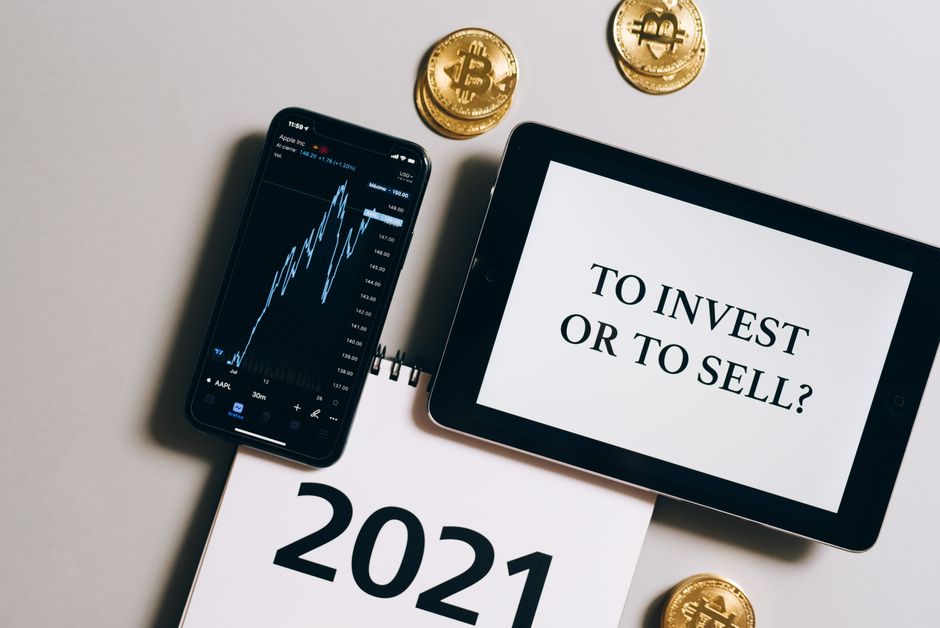
Not every asset class deserves equal allocation. Here is a frank evaluation of where the opportunity and the trap coexist — sometimes within the same category.
Broad Market Index Funds and ETFs
Low-cost total market index funds (expense ratios under 0.05%) remain the default answer for most investors, and for good reason. The S&P 500 has returned approximately 10–11% annually over the past 50 years, dividends reinvested. The Vanguard Total Stock Market ETF (VTI) and its mutual fund equivalents give you that exposure with almost no maintenance required.
The honest limitation: broad index exposure means you will hold every sector, including the ones that deserve to contract. If you are investing for a specific goal with a 5–7 year horizon, a 100% equity portfolio carries meaningful sequence-of-returns risk that many investors underestimate.
Real Estate and REITs
Real estate investment trusts offer liquid exposure to commercial and residential property without requiring a down payment or a mortgage application. REIT dividend yields have ranged from 3.5% to 6% depending on the subsector, but the underlying asset values have faced pressure from elevated interest rates that increase cap rates and reduce property valuations.
Direct real estate ownership remains viable for investors with at least $30,000–$50,000 in liquid reserves beyond the down payment. The math only works when you account for vacancy rates (budget 1–2 months annually), maintenance reserves (1% of property value per year), and property management (8–10% of rental income if you outsource it).
Treasury Securities and Bond Ladders
Bond ladders — a series of Treasury or investment-grade corporate bonds maturing at staggered intervals — have staged a quiet comeback as yields have normalized. A ladder of 1-year, 2-year, 3-year, and 5-year Treasuries provides predictable income and eliminates reinvestment rate risk. In 2026, a $50,000 ladder might generate $2,250–$2,750 annually in interest income at current rates.
AI-Adjacent Sectors and Thematic Funds
Thematic funds focused on AI infrastructure, robotics, and automation have attracted significant capital. These funds are not inherently speculative in the same way as individual AI startup investments, but they are concentrated in a single narrative. Concentration means elevated volatility when the narrative shifts — and it will shift.
If you allocate to thematic funds, treat them as satellite positions (5–15% of your portfolio maximum) rather than core holdings. The performance of AI-adjacent sectors over the next five years will be determined by whether actual revenue growth catches up to current valuations, not by the enthusiasm visible in headlines.
How to Build a Portfolio That Doesn’t Panic-Sell in Downturns
Portfolio construction is not about finding the best performing assets. It is about building a structure that survives periods of maximum stress so that you can capture long-term returns rather than giving them back at the bottom.
**Asset allocation is the most consequential decision.** Two investors with identical income and timeline who hold different allocations will end up with materially different wealth outcomes over 20 years — not because one picked better stocks, but because one held a structure that allowed them to stay invested through a 30% drawdown.
| Risk Profile | Equity Allocation | Fixed Income Allocation | Alternative / Cash |
|---|---|---|---|
| Conservative (short horizon) | 40% | 50% | 10% |
| Moderate (10–15 year horizon) | 60% | 30% | 10% |
| Aggressive (15+ year horizon) | 80% | 15% | 5% |
These are illustrative ranges, not personalized advice. Your actual allocation depends on factors discussed in the self-assessment section above.
**Rebalancing workflow:** Set a calendar reminder for quarterly reviews and a threshold trigger (e.g., any asset class drifting more than 5% from its target allocation). Rebalancing forces you to sell high and buy low mechanically, which is the opposite of what emotional instinct tells you to do.
**Tax-advantaged accounts are not optional.** If your employer offers a 401(k) with matching contributions, that match is an immediate 50–100% return on your contribution — the best guaranteed return available in any market environment. Max out Roth IRA contributions ($7,000 in 2026 for those under 50) if you qualify. HSAs triple the tax advantage by offering deductions on contributions, tax-free growth, and tax-free withdrawals for medical expenses.
Passive Income Streams: What Is Viable and What Is a Funnel
Passive income is the most marketed phrase in the personal finance internet, and also one of the most commonly misunderstood. Here is what actually works at scale.
**Dividend investing** generates real income — but the numbers deserve context. A $100,000 portfolio in dividend aristocrats (companies that have raised dividends for 25+ consecutive years) might yield 2.8–3.5% in 2026, producing $2,800–$3,500 annually. That income is taxed at qualified dividend rates, which is favorable, but it is not transformative wealth on its own. Dividend investing is best understood as a component of total return strategy, not a standalone income solution.
**Rental real estate** produces the most reliable passive income stream for investors who do the math correctly. A single-family rental purchased at a 20% discount to market value with 20% down generates positive cash flow only when:
- The rent-to-purchase-price ratio exceeds 1% (e.g., $2,000/month rent on a $200,000 property)
- Vacancy is budgeted at 8–10% of gross rent
- Repairs are reserved at $1 per square foot annually
- Property management costs are factored if you do not self-manage
Break-even or negative cash flow in the early years is common if the property appreciates — but it is not truly passive income until the mortgage is paid off and the property is being managed efficiently.
**Peer-to-peer lending platforms** advertise returns of 6–10%, but they carry credit risk that is not present in bond funds. If 15% of borrowers default in a given year and the platform recovers 40 cents on the dollar, your net return could be significantly lower than advertised. Treat P2P lending as an experimental allocation, not a core income component.
The Compliance and Legal Layer Nobody Wants to Read
Ignoring the regulatory layer does not make it disappear — it just means you discover it at the worst possible time, usually during an audit.
**Capital gains taxation** in 2026 operates under the same long-term capital gains brackets that have applied since 2021. Gains on assets held longer than one year are taxed at 0%, 15%, or 20% depending on your taxable income. Short-term gains on assets held less than a year are taxed as ordinary income, which can be substantially higher at upper income brackets. This is the single most powerful argument for not day-trading: the tax code actively punishes short holding periods.
**Dividend tax treatment** distinguishes between qualified dividends (taxed at capital gains rates) and ordinary dividends (taxed as income). Index funds and individual stocks held longer than 60 days typically generate qualified dividends. REITs generate ordinary dividends, which are less tax-efficient — one reason REIT valuations are sensitive to changes in tax law.
**Foreign account reporting** applies if you hold investment accounts at non-US institutions exceeding $10,000 at any point during the year. Form 114 (FBAR) filing is required, and failure to file carries penalties that can exceed the account value. This catches people who travel abroad, work internationally, or inherit foreign accounts more often than it catches sophisticated tax dodgers.
**Before committing capital to any platform, verify registration.** Legitimate investment platforms are registered with the SEC or state securities regulators. You can search any investment adviser’s disciplinary history using the SEC’s Investment Adviser Public Disclosure (IAPD) database. If a platform is not registered and is promising guaranteed returns, you are looking at either a fraud or an unregulated scheme that offers no legal recourse.
Common Investor Mistakes That Cost More in 2026 Than in Prior Years
The mistakes are largely the same as prior years, but the 2026 environment amplifies some of them specifically.
**Market timing with macro headlines** continues to destroy wealth despite being universally understood as a bad idea. Studies consistently show that the 10 best trading days in any decade occur within weeks of the 10 worst trading days. Missing the best days — which are impossible to predict — destroys performance more than holding through drawdowns.
**Overconcentration in AI or tech sectors** is the 2026 version of the 2021 meme-stock trap. When a single sector represents 30% or more of a portfolio, a 40% correction in that sector turns a paper loss into a life-disrupting event. Sector concentration limits of 10–15% exist for a reason.
**Ignoring expense ratios** is a silent wealth destroyer. A 1% higher expense ratio on a $500,000 portfolio over 25 years compounds to approximately $220,000 in forgone wealth. That is not a rounding error. Index funds charging 0.03–0.08% exist specifically to eliminate this bleed.
**Lifestyle inflation triggered by early gains** deserves specific attention in a year when many portfolios have recovered strongly from 2022 lows. When your portfolio is up 15%, increasing your monthly draw or lifestyle spending feels natural. It is also the fastest way to interrupt the compounding process that makes long-term investing powerful.
Scaling Smart: When and How to Increase Your Investment Commitments
Increasing your investment contributions is a milestone, not a reflex. Here is a decision framework for doing it responsibly.
**The income-to-investment ratio signal** is simple: when your investment income (dividends, interest, rental cash flow) covers your monthly investment contributions, you have reached a meaningful threshold. At that point, your portfolio is beginning to compound on its own rather than relying entirely on new contributions.
**Dollar-cost averaging vs. lump-sum deployment** is a settled question in academic literature. When you have capital available to invest, deploying it immediately outperforms spreading it out over 6–12 months approximately 66–75% of the time, based on historical data across multiple market cycles. The psychological comfort of averaging is real, but it comes at a measurable expected cost.
**Adding alternative assets** (private equity, private credit, real estate syndications) requires accredited investor status and typically minimum commitments of $25,000–$50,000. Due diligence on private offerings is substantially harder than evaluating a publicly traded ETF — there is no real-time price discovery, limited liquidity, and limited regulatory oversight. If you do allocate to alternatives, cap the allocation at 10–15% of your total portfolio unless you have specialized expertise.
**Fee-only fiduciary financial advisors** are worth hiring when your financial situation has outgrown what you can manage confidently on your own. The fiduciary standard means they are legally required to act in your interest, not their own product shelf. Look for advisors compensated by flat fees or hourly rates rather than assets under management percentages to reduce conflicts of interest.
Best Investment Advice 2026: Key Takeaways
After working through the full playbook, three decisions consistently matter more than any individual stock selection or market timing call.
**Contribution rate is the most controllable variable.** A disciplined investor contributing 20% of income into a diversified portfolio will consistently outperform a brilliant investor contributing 5%. The math of compounding rewards consistency more than cleverness.
**Asset allocation is the most consequential decision.** Your equity-to-fixed-income split determines 90% of your portfolio’s volatility profile. Get it right for your actual timeline and risk temperament, not the textbook model.
**Avoiding catastrophic mistakes matters more than capturing every opportunity.** A portfolio that avoids the worst investor behaviors — panic selling, overconcentration, high fees, tax inefficiency — will outperform a theoretically optimal portfolio that self-destructs under pressure.
The best investment advice for 2026 is the same advice that worked in 2016 and will work in 2036: know your numbers, keep costs low, diversify systematically, and give compounding the time it needs to do its work.
Frequently Asked Questions (FAQ)
What is the best investment strategy for someone just starting out in 2026?
Start with a low-cost total market index fund or target-date retirement fund through your employer’s 401(k) if available. Capture the employer match first — it is the highest guaranteed return accessible to most new investors. Then build a three-month emergency fund before investing beyond the employer match. From there, automate monthly contributions and gradually build your asset allocation. The specific fund matters less than starting and staying consistent.
Is real estate still a good investment in the current economic environment?
Real estate remains viable, but the “easy money” environment of 2010–2021 has ended. Properties in growing secondary markets with strong local employment fundamentals can still generate positive cash flow. However, the days of 5% annual appreciation across all markets are over. Evaluate each property on cash flow metrics — rent-to-price ratio, cap rate, and operating expense estimates — rather than assuming appreciation will carry the investment.
How much money do I need to start investing, and does it have to be a lump sum?
You can start with as little as $50–$100 per month through most major brokerage platforms, which have eliminated minimum balance requirements. You do not need a lump sum. Systematic monthly contributions through dollar-cost averaging eliminate the need to time the market and build the habit before you build the balance. Any amount you can commit consistently will compound over time.
Top Product Recommendations
| Product Name | Rating | Key Feature | Est. Price | Action |
|---|---|---|---|---|
| Top-rated low cost index fund ETF | ★★★★★ | Editor-recommended low cost index fund ETF from this guide | $18–$42 | Check Lowest Price on Amazon |
| Best-value high yield savings account | ★★★★☆ | Affordable high yield savings account — strong everyday results | $12–$28 | Check Lowest Price on Amazon |
| Premium Treasury bond ladder | ★★★★☆ | Higher-end Treasury bond ladder for visible, lasting results | $45–$95 | Check Lowest Price on Amazon |
Affiliate Disclosure: This post contains affiliate links. We may earn a commission if you buy through our links, at no extra cost to you.
Leave a Reply