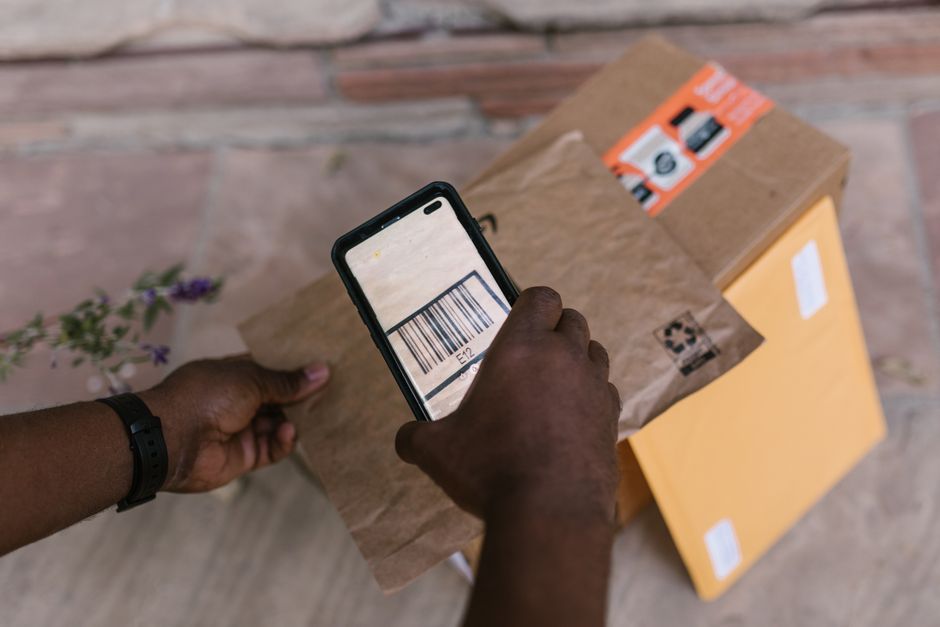
Amazon FBA Business Playbook: Setup and Launch
Starting an Amazon FBA business is a legitimate path to building a product-based income stream, but it requires upfront research, capital, and a clear strategy before you spend a single dollar on inventory. The “Fulfillment by Amazon” model lets you store products in Amazon’s warehouses, and Amazon handles picking, packing, shipping, and customer service. That convenience comes with real costs and compliance requirements that every s r must understand from day one.
Determine Your Product Niche and Target Market
Choosing the right niche is the single most consequential decision you’ll make. A niche that’s too broad — like “kitchen gadgets” — puts you against thousands of established s rs with deep reviews and lower costs. A niche that’s too narrow may not have enough search demand to sustain your business. The sweet spot is a subcategory where you can identify a specific customer problem, competition exists but isn’t impenetrable, and your supplier can deliver a quality product at a price that leaves healthy margins after Amazon’s fees.
Think about your personal interests or professional background too. Knowledge of a category gives you an edge when writing listings, answering customer questions, and spotting product improvements. If you love fitness, explore resistance bands, protein shakers, or resistance cable accessories. If you have experience in home improvement, look at storage organizers, mounting hardware, or garage shelving accessories. The combination of market data and genuine interest produces better long-term results than chasing whatever is trending that month.
Research and Analyze Market Trends and Customer Demand
Before committing to any product, run demand-side research. Use Amazon’s search bar autocomplete and filter results by bests rs to understand which ASINs already sell well. Check review counts on top products — if the top three have more than 500 reviews, you’re walking into a mature market where new entrants will struggle without a strong differentiation story. Look for products with 4 stars and below in the top results; those gaps reveal real customer pain points you can address with better quality, improved packaging, or superior instructions.
Google Trends can show you whether a category is growing, flat, or declining over the past two to five years. A category growing at 10% per year is far more attractive than one shrinking at 5% per year. Pay attention to seasonal patterns too — outdoor products peak in spring and summer, while holiday-related items spike in Q4. If your budget doesn’t allow you to weather off-season dips, avoid products with extreme seasonality.
Identify Potential Suppliers and Manufacturers
Most Amazon FBA s rs source products from overseas manufacturers, primarily in China. Platforms like Alibaba and Global Sources let you browse factories, request samples, and negotiate MOQs (minimum order quantities). Start with at least three suppliers, order samples from each, and compare quality, packaging, and communication responsiveness. A supplier who responds in 24 hours and sends a sample that matches your specifications is worth paying a slightly higher unit price than one who takes a week and sends something substandard.
Never work with a supplier without a clear contract covering production timelines, quality standards, payment terms, and defect resolution. Use a secure payment method through Alibaba Trade Assurance or a letter of credit for larger orders. Visiting trade shows — like the Canton Fair in Guangzhou or domestic shows like Las Vegas’s ASD Market Week — gives you face-to-face relationship-building opportunities that are difficult to replicate online.
Evaluate Profitability and Competition
Run a full unit economics calculation before placing your first order. Here’s a simplified comparison of the cost components you must account for:
| Cost Category | Typical Range | Notes |
|---|---|---|
| Product cost (FOB) | $2–$15 per unit | Varies wildly by category and complexity |
| Shipping to Amazon warehouse | $0.50–$3.00 per unit | Depends on weight, dimensions, and freight mode |
| Amazon referral fees | 8–15% of sale price | Category-dependent; most categories are 15% |
| Fulfillment fees | $2.45–$6.50 per unit | Based on package size and weight |
| Storage fees | $0.75–$2.40 per cubic foot | Higher during Q4 holiday season |
| Advertising (PPC) | $0.20–$2.00 per click | Budget for launch period especially |
Your target is a gross margin of at least 30% after all Amazon fees and product costs. If your math shows 15% margins, the business model is too thin to absorb unexpected costs — like storage fee increases, returns, or rising shipping rates.
Quick pick: Compare top-rated Amazon Fba options.
Establishing Your Amazon FBA Account
Creating a s r account is straightforward, but the decisions you make during setup have long-term consequences. Amazon offers two s r plan types: Individual (per-item fees plus $0.99 per sale) and Professional ($39.99 per month flat). If you plan to sell more than 40 units per month, the Professional plan almost always wins on cost. Most serious FBA s rs start with the Professional plan on day one.
Create an Amazon S r Central Account
Go to s rcentral.amazon.com and register as a new s r. You’ll need a government-issued ID, a credit or debit card in your business name (or a personal card if you’re starting as a sole proprietor), a phone number, and a tax identification number (EIN or SSN for US residents). Choose your business entity type carefully — forming an LLC creates a legal separation between your personal assets and business liabilities, which is strongly recommended even if you’re operating solo initially.
Amazon will prompt you to complete identity verification, tax information interview, and bank deposit setup. These steps are mandatory and cannot be skipped. The process typically takes 24 to 48 hours for initial account activation, though identity verification can extend to a few days during high-volume periods.
Set Up Your Amazon FBA Settings and Preferences
Once your account is active, configure your shipping settings. Decide whether you’ll use Amazon’s label service (where Amazon prints and applies labels for a small fee) or merchant-supplied labels (where you print labels yourself). Merchant-supplied labels save money but require a quality label printer and consistent processes to avoid mislabeling fees, which Amazon charges at $0.20–$2.00 per unit when labels are incorrect.
Set your default return address, communication preferences, and notification settings. Enable two-factor authentication on your S r Central account — security breaches can result in account suspension and inventory holds that take weeks to resolve. Connect your account to any inventory management or repricing software you plan to use, but do so through Amazon’s approved API integrations to stay in compliance.
Understand Amazon’s S r Policies and Agreements
Amazon’s s r policies are extensive, and violations result in anything from a warning email to permanent account suspension. Read the full Amazon Services Business Solutions Agreement before you list your first product. Key policy areas that catch new s rs include:
- **Restricted products**: Certain categories require pre-approval (health supplements, cosmetics, hazardous materials, media). Listing without approval triggers automatic removal.
- **Product authenticity**: Selling counterfeit goods — even unintentionally — is a zero-tolerance violation.
- **Review manipulation**: Paying for reviews, using incentivized review programs, or asking buyers to change reviews violates Amazon’s terms and can result in permanent ban.
- **Competitor targeting**: Negative review attacks or fake complaints against competitor listings are actionable violations.
Stay current by checking S r Central’s policy announcements weekly. Amazon updates its terms frequently, sometimes with only 30 days’ notice before enforcement begins.
Sourcing and Product Preparation
Product sourcing is where most of your startup capital will go, and mistakes here cascade into every other part of your business. A low-quality product with poor packaging will generate negative reviews, which tank your listing’s conversion rate and get your account flagged for poor s r performance.
Finding and Negotiating with Reliable Suppliers
When evaluating suppliers on Alibaba, look for Gold Supplier status, verified business licenses, and a transaction history score above a threshold that indicates ongoing legitimate business. Request product samples from at least three suppliers before placing a production order. Evaluate samples on material quality, finishing, functionality, and packaging. If a supplier cannot produce a sample that meets your standards, production runs will almost certainly be worse.
Negotiate pricing based on order volume. Most suppliers offer tiered pricing where the per-unit cost drops significantly at 500, 1,000, or 2,000+ units. Don’t be swayed by the lowest price alone — a supplier at $1.80 per unit who misses deadlines and ships defective goods is more expensive than a supplier at $2.10 per unit who delivers on time with consistent quality.
Meeting Amazon’s Packaging and Labeling Requirements
Amazon has specific packaging standards for FBA shipments. Poly bags must have a 5-inch opening minimum and a suffocation warning printed on each bag if the product could harm a child. All packages must pass a “frustration-free packaging” test — meaning the product should be removable without tools or sharp packaging. Items must be individually labeled with scannable FNSKU labels that Amazon generates in your S r Central dashboard.
If your products are liable to leak, break, or contaminate other items during shipping, you must use additional protective packaging — double boxing, foam inserts, or sealed inner pouches. Amazon charges a $0.01–$0.05 per unit disposal fee for items that arrive damaged at fulfillment centers due to insufficient packaging.
Scheduling and Managing Shipments to Fulfillment Centers
In S r Central, create a shipment plan and designate which products go to which fulfillment center. Amazon’s inventory placement service lets you send all inventory to one warehouse (higher per-unit fee) or distribute across multiple regional centers (lower per-unit fee but more complex logistics). For new s rs, the centralized option simplifies tracking and reduces the risk of misdirected shipments.
Use a reputable freight forwarder who specializes in Amazon FBA shipments. They will handle customs documentation, inland freight, and last-mile delivery to Amazon’s warehouses. Expect a total “landed cost” of roughly $0.50–$3.00 per pound for ocean freight from China to a US port, plus domestic shipping to the Amazon warehouse. Air freight is faster but typically 3–5 times more expensive per pound.
Launching Your Product Listing
A great product with a mediocre listing will underperform a mediocre product with a compelling listing. Your listing is your storefront — it’s the only marketing tool you control before you have reviews, rankings, and social proof.
Creating Compelling and Informative Product Listings
Every listing needs five core elements: a clear title, high-quality images, a descriptive bullet-pointed features section, a detailed product description, and relevant keywords embedded throughout. The title should front-load the most important information — brand name (if applicable), product type, key material or function, size or quantity, and primary benefit. Avoid ALL CAPS, excessive punctuation, or promotional language like “best ever” or “amazing deal” as Amazon suppresses listings with keyword stuffing or hyperbolic claims.
Images must be high-resolution, show the product against a white or clean background, and demonstrate scale with a common reference object like a coin or ruler. Lifestyle images showing the product in use significantly improve conversion rates over studio-only listings. You can include up to seven images per listing — use them strategically to answer the questions customers ask most frequently.
Optimizing Listings for Search and Conversion
Amazon’s A9 search algorithm matches customer queries to relevant listings. Your keyword strategy should target three types of terms: broad head keywords (high volume, high competition), precise long-tail keywords (lower volume, higher purchase intent), and brand-modified searches (for your specific brand’s product comparisons). Use a keyword research tool — Helium 10, Jungle Scout, or S rapp — to identify search volume, competition density, and estimated PPC costs for your target keywords.
Backend keywords in S r Central allow you to add search terms without cluttering the visible listing. Fill these with alternate spellings, common misspellings, synonyms, and related product types. Avoid repeating keywords already used in the title or bullet points — backend fields are for additional terms only.
Setting Competitive Pricing and Promotions
Pricing on Amazon is dynamic. Use a repricing tool or manual monitoring to keep your prices competitive relative to the Buy Box winner. The Buy Box is the “Add to Cart” button that Amazon awards to the s r with the best combination of price, availability, fulfillment method (FBA s rs have an edge), and s r performance metrics. You cannot win the Buy Box if your s r metrics are below standard, regardless of your price.
Launch promotions like Amazon coupons, Lightning Deals, and social media promotional codes can jumpstart early sales velocity. Amazon’s algorithm rewards listings with strong early sales velocity by boosting organic ranking. However, don’t discount below your floor margin just for the sake of volume — a loss-leader strategy can destroy profitability if sustained too long.
Managing Inventory and Sales
Inventory management is where most FBA s rs either build sustainable cash flow or burn through startup capital with costly stockouts and overstocked seasonal deadweight.
Tracking and Managing Inventory Levels
Amazon’s Inventory Dashboard in S r Central gives you real-time stock levels and velocity data. The key metric to watch is “days of supply” — how many days your current inventory will last at the current sales rate. If you’re at 15 days of supply and your lead time from supplier to Amazon warehouse is 45 days, you need to reorder immediately.
Stockouts are costly in two ways: you lose sales during the out-of-stock period, and Amazon’s algorithm temporarily suppresses your listing’s organic ranking when inventory returns. A product that was ranking at position 200 for its primary keyword may drop to position 2,000 after a stockout — recovery takes weeks of sustained sales and advertising spend.
Analyzing Sales Data and Customer Feedback
Download your unit session and conversion data from S r Central’s Business Reports section weekly. Track which ASINs are converting, which keywords are generating clicks, and what your PPC ACOS (advertising cost of sale) is. An ACOS above your target margin threshold means your advertising spend is unprofitable and needs optimization — either by tightening keyword targeting, improving ad copy, or reducing bids.
Customer reviews and feedback are free market research. Patterns in one-star reviews reveal product defects you can address with your supplier. Patterns in three-star reviews often highlight gaps in your listing copy — customers expected something your product doesn’t do, which is a communication failure, not a product failure. Respond professionally to every customer question and negative review — public responses show future buyers that you stand behind your brand.
Expanding and Scaling Your Amazon FBA Business
Once your first product line is profitable and stable, the next phase is growth through product line extension and operational efficiency.
Identifying New Product Opportunities
Successful FBA s rs continuously scan the market for adjacent product opportunities. A brand that sells resistance bands naturally extends into yoga mats, ankle weights, and door-mounted exercise bands. The advantage of product line extensions is that you can reuse existing reviews through “Parent ASIN” bundling — bundling complementary products under one listing transfers review counts and improves ranking faster than launching new standalone products.
Monitor Amazon’s New Releases and Movers & Shakers sections in your category weekly. New entrants, shifting customer ratings, and emerging use cases all signal opportunities. Google’s “people also search for” suggestions and Amazon’s question-and-answer sections on competitor listings reveal unmet customer needs that you can address.
Optimizing Operations for Efficiency
As your catalog grows, manual processes become bottlenecks. Invest in inventory management software (Restock Pro, SOAIL, or inVentary) to automate reorder points and prevent stockouts. Use a repricing tool (Repricer, Feedvisor, or Bqool) to monitor Buy Box competition across your entire catalog without constant manual attention.
Negotiate better freight rates as your volume increases. A supplier who quoted $2.50 per unit at 500 units will often drop to $1.80 per unit at 2,500 units — that’s a 28% cost reduction with no change in product quality. Freight forwarders similarly offer volume discounts that significantly reduce your per-unit landed cost.
Diversifying Your Product Offerings
Concentration risk is real in Amazon FBA. If one product represents 80% of your revenue, a regulatory change, a new competitor with aggressive pricing, or a viral negative review can threaten your entire business. Aim to distribute revenue across at least three to five distinct product lines, each with two to three ASINs. This spreads risk and gives you multiple ranking properties to leverage for new product launches.
Avoiding Common Pitfalls and Mistakes
Every FBA s r who has been in business for more than a year has a story of a costly mistake. Learning from others’ errors is faster and cheaper than making them yourself.
Complying with Amazon’s Ever-Changing Policies
Amazon’s policy environment is dynamic. The company has made over 50 significant policy changes per year in recent cycles, affecting fee structures, Hazmat classifications, labeling requirements, and restricted category rules. Subscribe to S r Central’s announcements email, follow Amazon S r social media accounts, and participate in s r forums like the Amazon S r Community on Reddit or the Tme community. Waiting for a policy to affect your account before learning about it is reactive at best and catastrophic at worst.
Managing Customer Complaints and Returns Effectively
Amazon’s A-to-Z Guarantee protects buyers, and customers know it. A return rate above 5% for a product category flags your account for potential review. Respond to every customer message within 24 hours — Amazon’s s r standards measure response time, and below-standard performance triggers account health warnings.
For returns, inspect every returned item promptly. Amazon’s inventory reconciliation credits you for items returned in sellable condition, but credits are not issued for damaged returns until you file a reimbursement case. Set a weekly calendar reminder to audit recent reimbursements and file claims within Amazon’s 45-day window.
Staying Informed About Scams and Fraud
The Amazon FBA ecosystem attracts bad actors. Common scams include fake supplier profiles on Alibaba demanding advance payment for non-existent factories, freight brokers who vanish with prepayment, and “consultants” who promise guaranteed rankings or wholesale sourcing lists for hundreds of dollars. Legitimate business building takes time — anyone promising shortcuts that bypass Amazon’s rules or guarantee specific income is either misinformed or intentionally deceiving you.
Use escrow services for international transactions, verify supplier credentials independently, and never share your S r Central login credentials with third-party tools or contractors. Two-factor authentication is non-negotiable.
Frequently Asked Questions (FAQ)
What are the costs associated with starting an Amazon FBA business?
Startup costs vary significantly by product category and business scale, but a realistic minimum for a first product launch is $3,000–$7,000. This budget should cover initial inventory (typically $1,500–$3,000 for a starter order of 300–500 units), freight shipping ($500–$1,500 depending on weight and freight mode), Amazon fees for the first 90 days ($500–$1,000 estimated), and a basic advertising budget ($300–$500 for launch promotions). Formation of a legal business entity, label printing equipment, and software subscriptions add another $200–$500. Budget conservatively and plan for unexpected costs — they’re virtually guaranteed in your first six months.
How long does it take to start seeing sales and profits from an Amazon FBA business?
Most new FBA s rs see their first sale within 2–6 weeks of inventory arriving at Amazon’s warehouse, assuming competitive pricing and a functional listing. However, profitability typically takes 6–12 months of sustained optimization. The first few months involve learning which keywords convert, adjusting pricing to win the Buy Box, and gathering initial reviews — a process that requires patience and ongoing advertising spend. S rs who expect immediate profits almost always quit before reaching profitability. Those who approach the business as a 12-month investment with realistic expectations about the learning curve have the highest long-term success rates.
What are the most common challenges faced by Amazon FBA s rs, and how can they be overcome?
The three most persistent challenges are competition, compliance, and cash flow. Intense competition in popular categories means new s rs must differentiate through product quality, listing optimization, or niche targeting — competing on price alone in a crowded category is a race to the bottom. Compliance challenges arise from Amazon’s complex and changing policy environment, requiring constant monitoring and proactive adjustment. Cash flow strain comes from the long cycle between paying suppliers, shipping to Amazon, and receiving payment on sold inventory — typically 30–60 days. Managing these challenges requires thorough upfront research, disciplined financial planning, and ongoing education through s r communities and industry resources.
How can I scale my Amazon FBA business for long-term success and growth?
Sustainable scaling requires three parallel tracks: product expansion, operational efficiency, and brand building. On the product side, add new ASINs methodically — launch one to two products, prove they work, then expand. On the operations side, automate everything that can be automated (repricing, reordering, reporting) so your time scales with revenue rather than hours worked. On the brand side, build a recognizable brand identity through packaging, logo, and customer communication — brands on Amazon have stronger long-term listing protection than anonymous product s rs. The FBA model rewards consistency, data-driven decision-making, and genuine customer focus over the long run.
Top Product Recommendations
| Product Name | Rating | Key Feature | Est. Price | Action |
|---|---|---|---|---|
| Best Amazon Fba Pick | ★★★★★ | Top-rated overall | $25–$45 | Check Lowest Price on Amazon |
| Budget Amazon Fba Option | ★★★★☆ | Great for beginners | $12–$28 | Check Lowest Price on Amazon |
| Premium Amazon Fba Choice | ★★★★☆ | Pro-level results | $50–$90 | Check Lowest Price on Amazon |
Affiliate Disclosure: This post contains affiliate links. We may earn a commission if you buy through our links, at no extra cost to you.
Leave a Reply