Getting Started with Amazon FBA
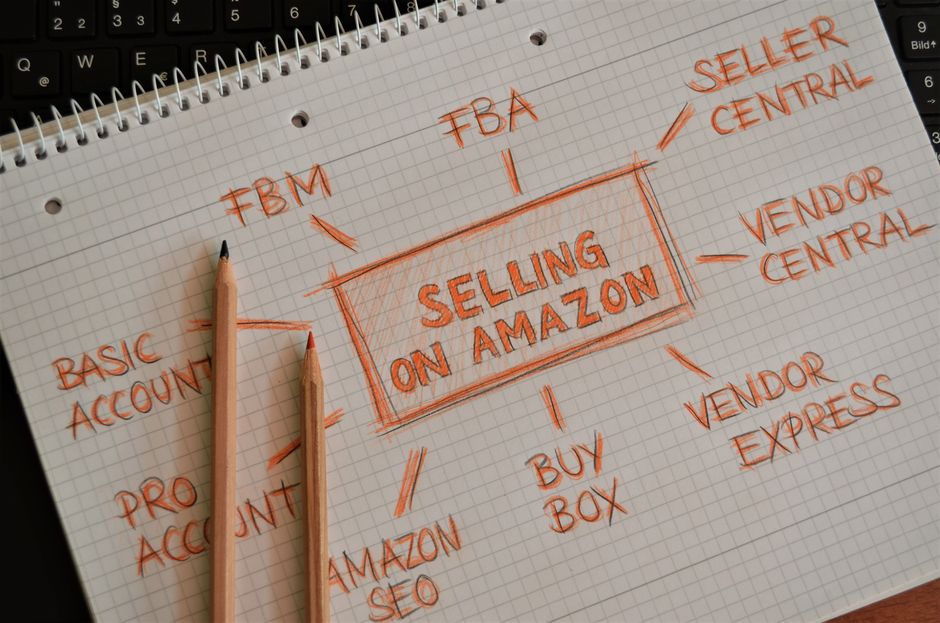
Amazon FBA (Fulfillment by Amazon) lets you sell products while Amazon handles storage, packing, and shipping. You send inventory to Amazon’s warehouses, and they take care of customer service and returns. This model works for beginners because it removes the logistics burden that typically kills new s rs.
Identifying profitable product niches requires research, not guesswork. Use tools like Jungle Scout or Helium 10 to analyze search volume, competition, and price points. Look for products priced between $15 and $50 with steady demand and manageable competition. Avoid saturated markets like phone cases or generic supplements—differentiation matters more than volume.
Setting up your S r Central account takes about 30 minutes. You’ll need a business license (LLC recommended for liability protection), bank account, tax ID, and credit card for fees. Amazon charges a $39.99 monthly subscription for Professional accounts, plus referral fees of 8-15% per sale depending on category. Budget $500-1000 for your first inventory order and another $300-500 for initial advertising.
Editor’s pick: Amazon FBA starter kit — compare options and current availability.
Sourcing and Preparing Products for FBA
Finding reliable suppliers starts with Alibaba for overseas manufacturers or ThomasNet for US-based options. Request samples from at least three suppliers before committing to bulk orders. Verify certifications (FDA, CE, or UL depending on product type) and ask for references from other Amazon s rs. A good supplier responds within 24 hours and provides transparent pricing.
Product quality directly impacts your s r rating and long-term profitability. Conduct drop tests, quality checks, and user testing before ordering 500+ units. Amazon’s restricted product guidelines prohibit certain items like hazmat materials, expired goods, or recalled products. Review the **FBA Product Restrictions** page monthly since policies change.
Preparing products for Amazon warehouses follows strict guidelines. Each unit needs a scannable barcode (FNSKU label) that Amazon provides through S r Central. Polybag items over $10 to prevent damage, and use box sizes that meet dimensional limits (25 inches on longest side, 50 lbs max weight). Many new s rs hire prep centers for $1-3 per unit to avoid mistakes that trigger Amazon rejections.
Launching and Marketing Your Products
A successful product launch combines discounted pricing, Amazon PPC ads, and external traffic. Start with a **soft launch** at 20-30% off retail price to generate initial reviews and sales velocity. Amazon’s algorithm rewards products that convert quickly in the first two weeks. Use **Sponsored Products** ads with automatic targeting to gather keyword data during launch.
Optimizing product listings requires more than keyword stuffing. Write benefit-focused bullet points that address customer pain points—”eliminates 99% of pet odors” beats “strong cleaning formula.” Use high-resolution images (1000×1000 pixels minimum) with lifestyle shots showing the product in use. A+ Content (formerly Enhanced Brand Content) increases conversion rates by 5-10% for brand-registered s rs.
Amazon’s advertising tools include Sponsored Products, Sponsored Brands, and Sponsored Display ads. Start with a $20-30 daily budget on Sponsored Products, targeting 30-50 relevant keywords. Track **ACoS (Advertising Cost of Sales)**—aim for 25-35% during launch, then optimize toward 15-20% for profitability. Disable underperforming keywords after 30 clicks with no sales.
Managing Inventory and Shipping
Inventory management prevents the two worst scenarios: stockouts that kill your ranking, and overstocking that drains cash flow. Use Amazon’s **Inventory Performance Index (IPI)** to maintain a score above 400. Set reorder points at 30 days of remaining stock based on average daily sales velocity. Factor in supplier lead times (60-90 days for overseas, 14-30 days domestic) plus shipping to Amazon.
Amazon’s inventory reports show sell-through rates, storage fees, and restock recommendations. Long-term storage fees kick in after 365 days at $6.90 per cubic foot—liquidate slow movers before hitting this penalty. Use the **Restock Inventory tool** to create optimized shipments based on Amazon’s warehouse network and current demand.
Shipping to Amazon warehouses uses either small parcel delivery (UPS/FedEx for under 150 lbs) or less-than-truckload (LTL) freight for larger shipments. Amazon’s **Partnered Carrier Program** offers discounted rates but requires advance scheduling. Label boxes correctly with FBA shipment IDs and routing labels, or Amazon charges $0.50-1.00 per unit for manual processing.
Analyzing and Optimizing Performance
Amazon’s **Business Reports** dashboard tracks session percentage, conversion rate, and buy box percentage. Healthy listings maintain 10-15% conversion rates and win the buy box 90%+ of the time. Sessions measure traffic—if you’re getting traffic but not converting, fix your images, price, or reviews. If you’re not getting traffic, increase ad spend or improve keyword optimization.
Performance metrics to monitor weekly include:
- **Total sales revenue** and units sold
- **Advertising ACoS** and total ad spend
- **Return rate** (should stay under 5%)
- **Customer review rating** (maintain 4.3+ stars)
- **Inventory levels** and IPI score
Adjust pricing based on competition and profit margins. If competitors drop prices, don’t automatically match—evaluate if you can win on differentiation instead. Use **automated repricing tools** like RepricerExpress cautiously since race-to-bottom pricing destroys margins. A 10% price decrease rarely produces enough volume to offset lost profit.
Expanding and Scaling Your FBA Business
Scaling from one product to a full catalog requires systems and capital. Successful s rs add 2-4 new products per quarter, focusing on related items that share the same target customer. If you sell yoga mats, consider blocks, straps, or towels—bundling related products increases average order value and customer lifetime value.
Managing multiple SKUs demands inventory planning software once you exceed 10 products. Tools like RestockPro or Forecastly automate reorder calculations and prevent stockouts. Allocate 40-60% of profits to inventory expansion rather than personal income during the first year. Running out of stock on your best s r costs more than keeping extra inventory.
Advanced marketing techniques include email list building through package inserts (within Amazon’s TOS), influencer partnerships, and external traffic from Facebook or Google Ads. Build a brand presence on Instagram or YouTube to reduce dependence on Amazon’s platform. Email your customer list when launching new products to generate day-one sales velocity.
Avoiding Common Pitfalls and Mistakes
Amazon’s s r policies change frequently, and ignorance isn’t an excuse. Common violations include review manipulation (offering free products for reviews), excessive customer contacts (don’t email buyers asking for reviews), and int ctual property infringement. A single serious violation can result in permanent account suspension with no appeal.
Account health metrics must stay in good standing: **Order Defect Rate** under 1%, **Pre-Fulfillment Cancel Rate** under 2.5%, and **Late Shipment Rate** under 4%. Amazon FBA s rs rarely hit these thresholds since Amazon handles fulfillment, but S r-Fulfilled Prime accounts must meet stricter standards.
Handling negative feedback professionally protects your s r rating. Respond to every 1-3 star review within 24 hours with a solution-focused message. Amazon allows you to request removal of feedback that violates guidelines (profanity, personal information, or product reviews mistakenly left as s r feedback). Maintain **professional tone**—arguing with customers publicly damages your brand.
Frequently Asked Questions
Q: What are the startup costs for Amazon FBA in 2026?
A: Expect $2,000-$5,000 minimum to launch properly. This includes $500-$1,500 for initial inventory (200-500 units), $300-$500 for product photography and listing optimization, $500-$1,000 for first-month advertising, and $500 for miscellaneous fees (UPC codes, business license, Amazon subscription). Undercapitalized s rs run out of inventory during their growth phase and lose momentum.
Q: How long does it take to become profitable with Amazon FBA?
A: Most s rs break even on their first product within 3-6 months if they follow proven product research methods and avoid common mistakes. Profitability depends on your product margins (aim for 30%+ net after all Amazon fees and advertising), reorder frequency, and ability to scale beyond one product. S rs who launch multiple products within the first year typically reach $3,000-$5,000 monthly profit by month 12.
Q: Can I run an Amazon FBA business part-time while working a full-time job?
A: Yes, Amazon FBA works well as a side business since Amazon handles fulfillment. Expect to invest 10-15 hours weekly during launch (product research, supplier communication, listing creation), then 5-10 hours weekly for established products (inventory monitoring, ad optimization, customer service). Batch tasks like replying to messages and updating ads into focused work sessions rather than checking constantly throughout the day.
Top Product Recommendations
| Product Name | Rating | Key Feature | Est. Price | Action |
|---|---|---|---|---|
| Top-rated Amazon FBA starter kit | ★★★★★ | Editor-recommended Amazon FBA starter kit from this guide | $18–$42 | Check Lowest Price on Amazon |
| Best-value barcode label printer for Amazon | ★★★★☆ | Affordable barcode label printer for Amazon — strong everyday results | $12–$28 | Check Lowest Price on Amazon |
| Premium product photography lighting kit | ★★★★☆ | Higher-end product photography lighting kit for visible, lasting results | $45–$95 | Check Lowest Price on Amazon |
Affiliate Disclosure: This post contains affiliate links. We may earn a commission if you buy through our links, at no extra cost to you.
Leave a Reply