{**Editing the draft for flow, keyword placement, E-E-A-T tone, and internal link integration.**
—
Shopify Dropshipping Niche Ideas Low Competition 2026: The Complete Playbook

**Identifying Profitable Niche Opportunities for Your Shopify Store**
Finding a low-competition niche is the single most consequential decision you will make in your Shopify dropshipping business. A crowded niche demands enormous ad spend to stand out, while a narrow but underserved audience can generate consistent sales with minimal friction. The goal for 2026 is not simply to sell products — it is to own a corner of a market where demand exists but supply is thin.
Start by analyzing macro consumer trends that show sustained growth. Aging populations drive demand for mobility aids and ergonomic home office gear. Rising pet ownership globally fuels the premium pet accessories segment. Health-conscious consumers seek specialized supplements, air purification devices, and low-impact fitness tools. Each of these broad categories contains sub-niches that have not yet been saturated by dedicated dropshipping stores.
Use Google Trends to compare the search interest trajectory of three to five potential niches over a 12-month window. A niche with steady or climbing interest — rather than a one-time viral spike — signals durable demand. Pair this with a quick check of the top organic results in Google for your target keyword. If the first page is dominated by established authority sites with thousands of reviews, the barrier to ranking is high. Conversely, if you see thin content, dated articles, and few dedicated stores, the field is open.
- **Longevity signals**: Look for niches tied to ongoing needs, not seasonal fads
- **Audience specificity**: Micro-niches (e.g., “cervical pillows for remote workers”) outperform broad categories
- **Margin potential**: Physical products with a cost-to-retail ratio below 0.35 are ideal for dropshipping
**Conducting Keyword Research**
Keyword research is where strategy meets execution. Even the best niche falls flat if customers cannot find your store. The objective is to find search terms with meaningful volume and buyer intent but manageable competition — often called “long-tail keywords.” These phrases convert at higher rates because searchers already know what they want.
Start with free tools like Google Autocomplete, People Also Ask, and the free tier of Ubersuggest. Type your seed phrase — for example, “ergonomic desk accessories” — and capture every suggestion that appears. Then layer in a secondary tool like AnswerThePublic or Keywords Everywhere to surface question-format keywords. Shoppers who search in question form are typically further along in the buying journey.
Focus your attention on keywords meeting three criteria simultaneously: search volume above 300 monthly searches, a competition score below 35 in your chosen tool, and clear commercial intent (words like “buy,” “best,” “review,” or “for” in the query). A phrase like “portable lumbar support pillow for office chair” checks all three boxes. It is specific enough to indicate purchase intent and broad enough to capture a consistent trickle of traffic.
| Keyword Characteristic | Low Competition Signal | High Competition Signal |
|---|---|---|
| Monthly Search Volume | 300–1,200 | 5,000+ |
| Word Count | 4–7 words | 1–2 words |
| SERP Content Depth | Thin, few posts | 10+ detailed guides |
| Ad Density | Few product ads | 4+ shopping ads |
**Setting Up Your Shopify Store**
Shopify offers three primary plans for new store owners: Starter, Basic, and Standard. For a dedicated dropshipping operation, the **Basic Shopify plan** at $39 per month provides enough functionality to launch professionally without paying for Advanced Shopify’s reporting tools you will not use on day one. Reserve the Starter plan only if you plan to drive all traffic through social media storefront links and external marketing channels.
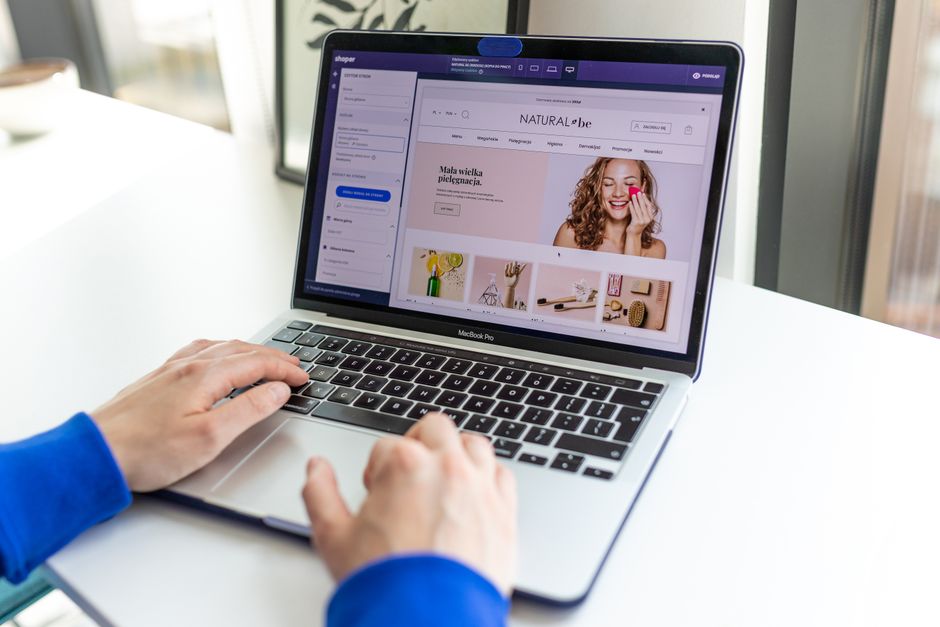
Your store’s visual design communicates credibility before a customer reads a single word. Choose a clean, minimalist theme from the Shopify Theme Store — Dawn and Sense are both free, mobile-responsive, and optimized for conversion. Customize the header to feature your niche clearly in the store name or tagline. A visitor landing on a store called “UrbanGear Essentials” should immediately understand what it sells.
Essential pages every dropshipping store needs:
- **About Us**: Share your brand story and the specific problem your store solves
- **Contact**: Include an email address and, ideally, a simple contact form
- **FAQ**: Pre-empt common objections about shipping, returns, and product quality
- **Privacy Policy & Terms of Service**: Required for advertising platform compliance
**Sourcing Products and Suppliers**
Your supplier network determines whether your store delivers on the promises you make to customers. For most US-based dropshipping beginners, finding reliable suppliers starts with understanding the broader dropshipping framework that ties sourcing, pricing, and customer service together. AliExpress remains the most accessible starting point, but the platform varies widely in product quality and communication speed. Filter suppliers by those rated four stars or higher with at least 500 completed orders. Never work with a supplier who cannot provide sample photos of the actual product they will ship.
DSers, a Shopify-integrated app, streamlines the supplier connection process. It syncs product listings directly to your store, automates order forwarding, and tracks shipment status. This reduces manual workload significantly as your catalog grows past 50 active products.
For niches with higher quality expectations — such as fitness equipment or home organization — consider US-based wholesale suppliers through directories like SaleHoo or Inventory Source. These suppliers typically offer faster shipping (3–7 days domestically) and better quality control, which translates to fewer refund requests and higher customer satisfaction scores. Faster shipping also reduces chargebacks, which protect your merchant account standing.
- **Communication test**: Message three suppliers before committing — response time and professionalism matter
- **Sample orders**: Always order one physical sample before listing any product at scale
- **Backup suppliers**: Identify at least two suppliers per top-selling product to mitigate stockout risk
**Creating Effective Product Listings**
Product listings are your 24/7 salespeople. A poorly written description or low-resolution image kills conversions even when your traffic is targeted. Each listing should solve a specific problem for the shopper and guide them confidently toward adding the item to their cart.
Write product descriptions in the second-person voice — speak directly to the customer. Structure each description with a **benefit-led headline**, followed by two to three paragraphs explaining key features in plain language. Avoid manufacturer jargon. Instead of “Constructed from high-density polyethylene,” write “Built with impact-resistant materials that survive daily use.”
Image quality is non-negotiable. Request high-resolution photos from your supplier, then enhance them with natural lighting and consistent backgrounds using free tools like Canva. For every product, aim to display at least five images: a hero shot, a detail close-up, an in-context usage photo, a scale reference (showing the product next to a common object), and a packaging shot. Videos are increasingly expected — a 15-second rotating product clip substantially increases conversion rates across device types.
Pricing strategy for new stores should anchor to perceived value rather than cost-plus. Research the three lowest-priced comparable products on Amazon and set your price 10–20% above them. Higher price positioning signals quality and funds your customer acquisition budget without sacrificing perceived legitimacy.
**Launching and Marketing Your Store**
A soft launch — restricting public access initially — lets you test the entire customer journey before scaling. Add three to five real product orders through your own store using a test account. Verify that orders appear in your Shopify dashboard, that order confirmations fire to your email, and that supplier notifications are received. This dry run surfaces technical problems before they affect paying customers.
For social proof before launch, consider a “friends and family” pre-sale at a slight discount in exchange for honest reviews. Collect at least five reviews per top product before opening the store to the public. Social proof dramatically reduces purchase anxiety — stores with zero reviews convert at roughly half the rate of stores with five or more verified reviews.
Post-launch marketing for dropshipping typically runs through three channels: organic social content, paid social advertising, and influencer partnerships. Start with Meta’s Facebook and Instagram ad platform, using a $10–15 daily budget to test one product-centric ad creative against one lifestyle-focused ad creative. Let the test run for five days before deciding which creative angle wins. Influencer partnerships work best in niches with passionate communities — a micro-influencer with 5,000 genuinely engaged followers in your niche often outperforms a celebrity with a million passive followers.
**Managing and Growing Your Business**
Day-to-day operations in dropshipping involve three recurring tasks: monitoring supplier performance, responding to customer inquiries, and tracking store analytics. Designate specific times each day — ideally early morning — to check open orders for delays or anomalies. A two-day shipping delay that goes unaddressed becomes a refund request and a negative review within 48 hours.
Shopify’s built-in analytics dashboard tracks conversion rate, average order value, and customer acquisition cost — the three metrics that determine whether your store is sustainable. Your target conversion rate should sit between 1.5% and 3% for standard dropshipping traffic. If it falls below 1%, audit your product pages, load speed, and checkout flow. If it exceeds 3%, you likely have room to increase ad spend and scale.
Growth levers to pull once the store is profitable:
- **Upsell and cross-sell**: Add a “frequently bought together” section to your checkout
- **Email capture**: Offer a small discount in exchange for an email address — target 5% of visitors
- **Catalog expansion**: Add 2–3 complementary products per month to increase average order value
- **Retargeting ads**: Deploy Meta Pixel to serve ads to site visitors who did not convert on their first visit
**Avoiding Common Pitfalls and Mistakes**
The dropshipping failure rate is high, but most failures follow predictable patterns that you can proactively avoid. The most common mistake is chasing trends without validating demand. A product that appears on TikTok today may be oversaturated by dropshippers within weeks, leaving you with inventory you cannot sell and ads you cannot profit from.
Another frequent error is neglecting legal compliance. The FTC requires that you disclose material connections in affiliate-style arrangements, which includes most dropshipping models where you profit from recommending supplier products. Include a clear disclosure statement on your site. Additionally, if you sell products subject to regulations — such as electronics, children’s items, or wellness products — ensure they meet US safety standards and include appropriate labeling.
Cash flow mismanagement is a silent store killer. Advertising costs accumulate daily, but customer payments clear over several days. Always maintain a cash reserve equal to at least 60 days of ad spend to avoid shutting down winning campaigns mid-flight due to a temporary cash gap.
Finally, avoid the “catalog bloat” trap. A store with 200 products is harder to manage and dilutes your marketing focus compared to a lean catalog of 20–30 carefully selected items. Start narrow, prove demand, then expand methodically.
Quick pick: Compare top-rated Dropshipping options.
Frequently Asked Questions
What is the best way to find low-competition niches for Shopify dropshipping in 2026?
The most reliable method combines trend analysis with keyword gap research. Use Google Trends to identify niches with sustained interest rather than one-time spikes. Then run those niche terms through keyword tools like Ubersuggest or Google Keyword Planner. Target phrases with 300–1,200 monthly searches, four or more words, and competition scores below 35. Validate demand further by checking whether few dedicated stores currently serve that specific sub-niche on the first page of Google.
How can I ensure my product listings are optimized for maximum conversions?
Focus on three elements: high-resolution images (five or more per product, including in-context usage shots), benefit-driven copy written in second-person voice, and strategic pricing anchored above the cheapest comparable option. Use bullet points for scannability, add a clear call-to-action on each product page, and include trust signals such as estimated delivery windows and return policy summaries near the Add to Cart button.
How do I know if a dropshipping niche is worth entering in 2026?
Enter a niche only after validating three things: demand is sustained (not a one-week trend), competition is manageable (thin content and few dedicated stores on Google’s first page), and your cost-to-retail ratio supports profitable advertising. Run your niche terms through Google Trends for a 12-month view, then check keyword difficulty scores in Ubersuggest or Keywords Everywhere. If monthly search volume sits between 300 and 1,200 with competition below 35, the niche passes the initial viability screen. Always order a physical sample before committing marketing budget.
What are some effective marketing strategies for promoting a Shopify dropshipping store?
Start with Meta paid social advertising using a $10–15 daily budget to test two creative variants per product. Once you identify a winning ad, scale the budget incrementally while monitoring your customer acquisition cost. Complement paid ads with organic social content relevant to your niche and targeted influencer partnerships with micro-influencers who genuinely serve your audience. As the store generates revenue, invest in email capture and retargeting campaigns to lower your dependence on paid traffic alone.
Top Product Recommendations

| Product Name | Rating | Key Feature | Est. Price | Action |
|---|---|---|---|---|
| Top-rated Shopify store setup app | ★★★★★ | Editor-recommended Shopify store setup app from this guide | $18–$42 | Check Lowest Price on Amazon |
| Best-value niche fitness equipment dropshipping | ★★★★☆ | Affordable niche fitness equipment dropshipping — strong everyday results | $12–$28 | Check Lowest Price on Amazon |
| Premium premium pet accessories wholesale | ★★★★☆ | Higher-end premium pet accessories wholesale for visible, lasting results | $45–$95 | Check Lowest Price on Amazon |
Affiliate Disclosure: This post contains affiliate links. We may earn a commission if you buy through our links, at no extra cost to you.
Leave a Reply